Trading is one of the most fundamental activities in the global economy, driving financial markets, business growth, and wealth creation. At its core, trading refers to the buying and selling of goods, services, or financial instruments with the goal of making a profit. In modern times, the term “trading” is most commonly associated with financial markets, where individuals and institutions exchange assets such as stocks, currencies, commodities, and cryptocurrencies. Trading plays a vital role in maintaining market liquidity, determining asset prices, and enabling investors to capitalize on market movements.
What Is Trading?
Trading is the process of exchanging one asset for another, typically involving the purchase and sale of financial instruments such as stocks, bonds, commodities, currencies, or derivatives. The primary objective of trading is to generate profit from price fluctuations in these assets. Traders analyze market trends, economic data, and technical indicators to make informed decisions about when to buy or sell. Unlike long-term investing, which focuses on gradual wealth accumulation, trading often involves shorter time frames and more frequent transactions. Trading can take place on various platforms, including stock exchanges, forex markets, and cryptocurrency exchanges, each offering unique opportunities and risks.
Types of Trading
There are several types of trading, each with its own strategies, time frames, and risk levels. Day trading involves buying and selling assets within the same day, taking advantage of small price movements. Swing trading focuses on capturing short- to medium-term trends, holding positions for several days or weeks. Position trading is a longer-term approach, where traders hold assets for months based on fundamental analysis. Scalping is a high-frequency strategy that aims to profit from tiny price changes over very short periods. Algorithmic trading uses computer programs and mathematical models to execute trades automatically based on predefined criteria. Each type of trading requires different skills, tools, and risk management techniques, allowing traders to choose the style that best suits their goals and personality.
How Trading Works
Trading operates through financial markets where buyers and sellers interact to exchange assets. When a trader places an order to buy or sell, it is matched with another participant’s order through a broker or trading platform. The price of an asset is determined by supply and demand—when more people want to buy than sell, prices rise, and when more want to sell, prices fall. Traders use two main types of analysis to make decisions: fundamental analysis, which evaluates economic indicators, company performance, and market conditions; and technical analysis, which studies price charts, patterns, and indicators to predict future movements. Successful trading requires discipline, emotional control, and a well-defined strategy to manage risk and maximize returns.
Different Markets for Trading
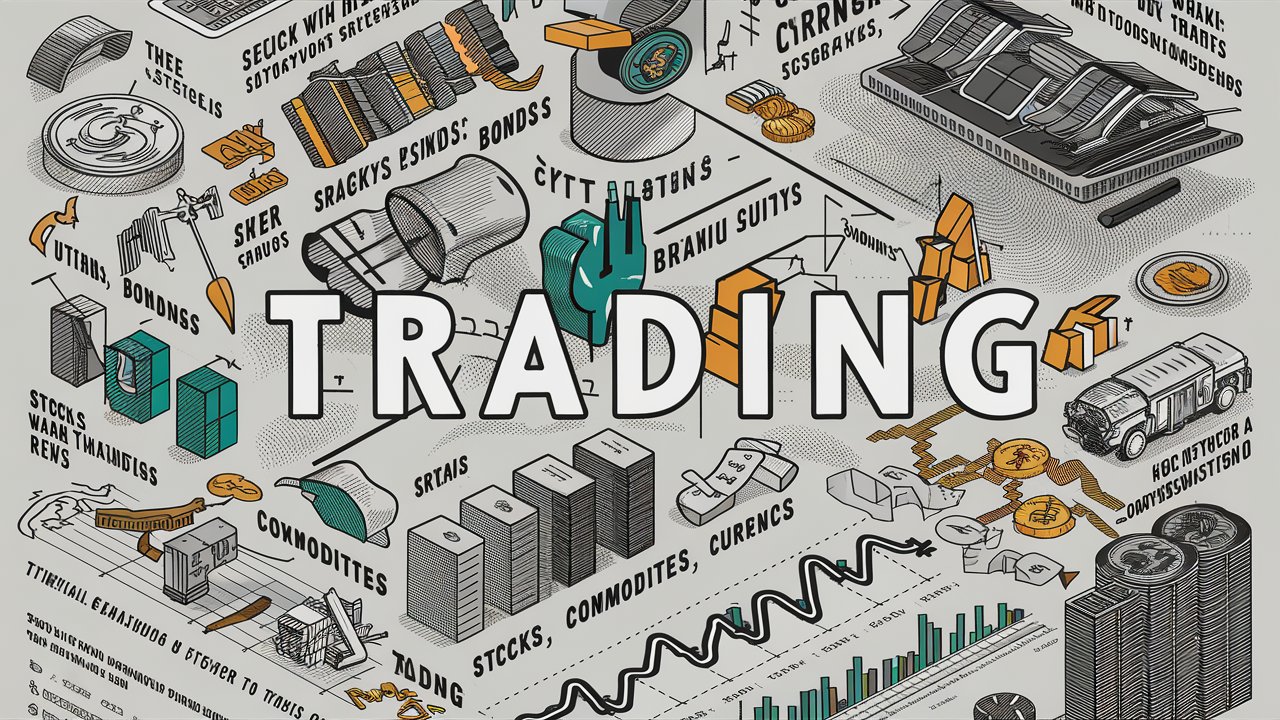
Trading takes place across various financial markets, each offering unique opportunities and characteristics. The stock market allows traders to buy and sell shares of publicly listed companies, making it one of the most popular forms of trading. The foreign exchange (forex) market is the largest and most liquid market in the world, where currencies are traded in pairs such as EUR/USD or GBP/JPY. The commodities market involves trading physical goods like gold, oil, and agricultural products, often used for hedging against inflation or economic uncertainty. The cryptocurrency market is a newer, digital frontier where assets like Bitcoin and Ethereum are traded 24/7 on decentralized exchanges. Each market operates differently, but all share the same fundamental principle—profiting from price fluctuations.
The Role of Technology in Modern Trading
Technology has transformed trading from a manual, floor-based activity into a fast-paced, digital process accessible to anyone with an internet connection. Online trading platforms and mobile apps allow individuals to trade global markets in real time, with advanced tools for analysis, charting, and order execution. Algorithmic and high-frequency trading systems now dominate institutional markets, executing thousands of trades per second based on complex algorithms. Artificial intelligence and machine learning are increasingly being used to predict market trends and automate decision-making. This technological evolution has democratized trading, making it easier for beginners to participate while also increasing competition and volatility in the markets.
Risks and Rewards of Trading
Trading offers the potential for significant profits, but it also carries substantial risks. Market volatility, economic uncertainty, and emotional decision-making can lead to losses if not managed properly. Successful traders understand that risk management is as important as profit generation. Techniques such as setting stop-loss orders, diversifying portfolios, and limiting leverage help protect capital. The rewards of trading include financial independence, flexibility, and the excitement of participating in global markets. However, consistent success requires education, discipline, and continuous learning.
Conclusion
Trading is a dynamic and integral part of the global financial system, offering opportunities for profit, growth, and learning. Whether in stocks, forex, commodities, or cryptocurrencies, trading allows individuals to participate in the movement of markets and economies. Understanding what trading is, how it works, and the different strategies involved is the first step toward becoming a successful trader. With the right knowledge, discipline, and risk management, trading can be both a rewarding and empowering pursuit. However, it requires patience, continuous education, and a clear plan to navigate the ever-changing financial landscape effectively.
Frequently Asked Questions
1. What is the main purpose of trading?
The main purpose of trading is to buy and sell assets to profit from price fluctuations in financial markets. It also helps maintain market liquidity and price discovery.
2. What is the difference between trading and investing?
Trading focuses on short-term profits through frequent transactions, while investing aims for long-term wealth accumulation by holding assets over time.
3. Is trading risky?
Yes, trading involves risk due to market volatility and unpredictable price movements. Proper risk management and education can help minimize potential losses.
4. Can beginners start trading easily?
Yes, beginners can start trading through online platforms, but it’s essential to learn the basics, practice with demo accounts, and start with small investments.
5. What are the most popular markets for trading?
The most popular markets include stocks, forex, commodities, and cryptocurrencies, each offering unique opportunities and risk levels.